

Tech for Justice
Advancing tools that help law enforcement solve crimes.
Law Enforcement Technologies Capabilities Reference
| Technology | How It Advances Crime Solving | |
|---|---|---|
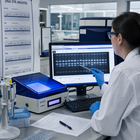 |
Traditional DNA Processing - Short Tandem Repeat (STR) Analysis, Y-DNA, and Mitochondrial DNA | These forensic DNA methods help identify suspects, connect individuals to crime scenes, establish biological relationships, and identify unknown victims. STR analysis creates unique DNA profiles, while Y-DNA and mitochondrial DNA can generate leads from limited or degraded samples, making them valuable tools for solving crimes, cold cases, and missing-person investigations. Compatible with existing criminal justice DNA Databases (Combined DNA Index or CODIS) |
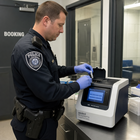 |
Rapid DNA | Produces a full DNA profile from an offender sample at the booking station in under 90 minutes. Enables same-day CODIS database hits, compressing the identification timeline from weeks to hours. Creates investigative leads from forensic samples. |
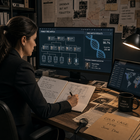 |
Forensic Investigative Genetic Genealogy (FIGG) | Uses consumer genealogy databases to build family trees from unidentified crime scene DNA, solving cold cases previously considered unsolvable — including the Golden State Killer. |
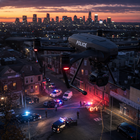 |
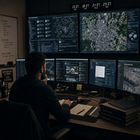
Unmanned Aerial Vehicles (Drones / UAVs) | Provides real-time aerial surveillance, rapid crime scene documentation, missing persons searches, and tactical situational awareness — reducing ground search time from days to hours and improving officer safety. |
 |
OSINT — Open Source Intelligence Systems | Aggregates publicly available data (social media, forums, public records, satellite imagery) into actionable intelligence, enabling investigators to build suspect profiles and track criminal networks. |
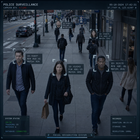 |
Facial Recognition Technology (FRT) | Compares surveillance images against booking photo databases to identify unknown suspects within seconds, accelerating investigations into violent crimes, terrorism, and fugitive apprehension. |
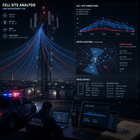 |
Cell Site Location Information (CSLI) | Places suspects and victims near crime scenes by analyzing carrier records of which cell towers a phone connected to, establishing timelines and disproving alibis in homicide, robbery, and trafficking cases. |
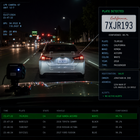 |
License Plate Recognition (LPR) Cameras | Automatically reads and logs vehicle plates in real time, alerting officers to stolen vehicles and wanted persons — and reconstructing travel patterns days or weeks after a crime. |
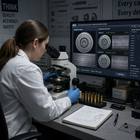 |
NIBIN — National Integrated Ballistic Information Network | Microscopically images fired cartridge casings and runs automated comparisons against a national database, linking seemingly unrelated shootings to the same firearm — connecting gang activity and serial shooters. |
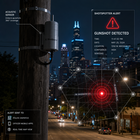 |
Gunshot Detection Systems (ShotSpotter) | Acoustic sensors triangulate gunfire location to within meters and alert dispatch within 45 seconds — enabling immediate evidence collection at shooting scenes before evidence is disturbed. |
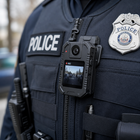 |
Body-Worn Cameras (BWC) | Creates irrefutable contemporaneous video records of arrests, use-of-force incidents, and interviews — strengthening prosecutions and documenting confessions or admissions at the point of contact. |
 |
AFIS / NGI — Automated Fingerprint Identification | Compares latent prints from crime scenes against tens of millions of records in the FBI's Next Generation Identification system in minutes, achieving identifications that manual comparison would take months to uncover. |
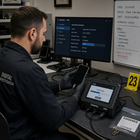 |
Mobile Device Digital Forensics (UFED/Cellebrite) | Extracts deleted texts, call logs, GPS history, app data, and encrypted communications from locked smartphones — providing digital timelines and co-conspirator networks critical to prosecuting trafficking and homicide cases. |
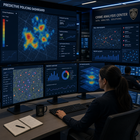 |
Predictive Analytics & Crime Mapping Software | Analyzes historical crime data, time-of-day patterns, and environmental factors to forecast where crimes are most likely to occur, enabling targeted patrols that measurably reduce hot-spot crime rates. |
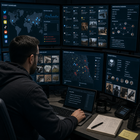 |
Social Media Intelligence (SOCMINT) | Monitors public social platforms for threat posts, gang activity, and suspect communications — providing real-time intelligence, evidence of intent, and network mapping of criminal organizations. |
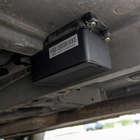 |
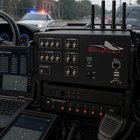
GPS Tracking Devices | Court-authorized covert placement on suspect vehicles provides precise real-time location data, exposing drug distribution routes, meeting locations with co-conspirators, and evidence of pre-planned criminal activity. |
 |
IMSI Catchers (Stingrays / Cell Site Simulators) | Simulates a cell tower to capture device identifiers from phones in a target area, enabling investigators to identify unknown suspects' phone numbers and confirm physical presence at a crime location. |
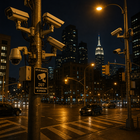 |
CCTV & Video Surveillance Networks | Persistent camera networks at transit hubs, businesses, and public spaces provide movement corridors for suspects, real-time pursuit tracking, and video evidence admitted in 70%+ of urban criminal trials. |
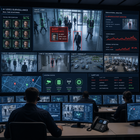 |
AI-Powered Video Analytics | Machine learning algorithms automatically scan hours of CCTV footage for a target's clothing, gait, or vehicle — reducing detective review time from days to minutes and surfacing patterns invisible to human analysts. |
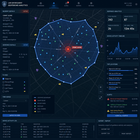 |
Geofence Warrants & Location Data Analytics | Compels location service providers to identify all devices present within a geographic boundary at a specific time, placing unknown suspects at scenes of homicides, bombings, and organized retail theft events. |
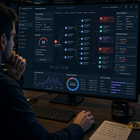 |
Cryptocurrency & Blockchain Tracing | Analytics tools trace pseudonymous crypto transactions through mixer services and exchange accounts, identifying wallets tied to ransomware, dark web drug sales, and money laundering. |
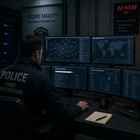 |
Dark Web Investigation Tools | Specialized crawlers and undercover platforms infiltrate darknet marketplaces and forums selling drugs, weapons, CSAM, and stolen data — generating federal prosecutions and international takedowns. |
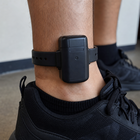 |
Electronic Monitoring (GPS Ankle Monitors) | Provides continuous court-ordered location monitoring of defendants and parolees, instantly alerting officers to exclusion-zone violations, curfew breaches, and proximity to victims or prior crime scenes. |
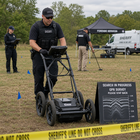 |
Ground Penetrating Radar (GPR) | Non-invasive sub-surface radar locates clandestine graves, buried weapons, and concealed evidence without destructive excavation — enabling homicide investigators to confirm burial sites before committing forensic resources. |
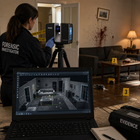 |
3D Crime Scene Scanning & LiDAR Technology | Laser scanners capture complete crime scenes as millimeter-accurate 3D models in minutes — creating court-admissible virtual environments and enabling jury walk-throughs years after the scene is released. |
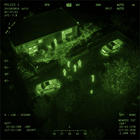 |
Thermal / Infrared Imaging Systems | Detects heat signatures through darkness, smoke, and foliage — enabling aerial and ground search teams to locate hiding suspects, missing persons, and clandestine grow operations invisible to standard cameras. |
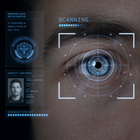 |
Iris & Multi-Modal Biometric Recognition | Iris scans provide a 1-in-10 billion unique identifier, enabling rapid booking identification and cross-border verification, closing loopholes exploited by subjects with altered fingerprints or false identities. |
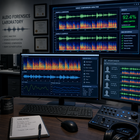 |
Voiceprint Analysis & Audio Forensics | Spectrographic analysis and AI comparison of threat calls and intercepted communications identifies speakers from known voice samples, linking suspects to extortion and bomb threat investigations. |
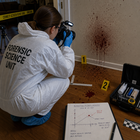 |
Bloodstain Pattern Analysis (BPA) Software | 3D modeling software reconstructs the origin points, directionality, and sequence of blood deposits at homicide scenes, reconstructing victim and attacker positions that contradict or corroborate witness accounts. |
|
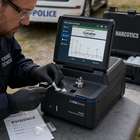
Field Drug & Mass Spectrometry (FTIR/LCMS) | Portable and lab spectrometers identify unknown substances in seconds, detecting novel fentanyl analogues and designer drugs — enabling immediate charging decisions and officer safety warnings at the scene. |
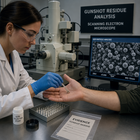 |
Gunshot Residue (GSR) Analysis | Scanning electron microscopy detects barium, antimony, and lead particles on hands, clothing, and surfaces, placing a suspect in proximity to a discharged firearm at the time of the crime. |
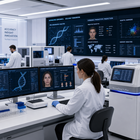 |
Next-generation DNA sequencing (NGS) - STR Analysis, Single Nucleotide Polymorphism (SNP) Analysis | Analyzes hundreds of genetic markers to predict the physical appearance of an unknown subject from trace DNA evidence — generating investigative leads when no database match exists. Compatible with certain consumer-based DNA Genealogy databases for forensic investigative genetic genealogy |
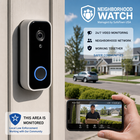 |
Neighborhood Camera Networks (Ring/Flock) | Aggregates doorbell and driveway camera footage from participating residents through platforms like Neighbors, creating community-wide surveillance corridors capturing suspect approach and flight routes in residential crimes. |
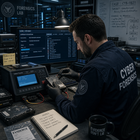 |
Cyber Forensics & Network Investigation | Recovers deleted files, chat logs, browsing history, and malware artifacts from seized computers and servers, supporting prosecutions of hacking, child exploitation, financial fraud, and ransomware attacks. |
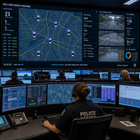 |
Automated Vehicle Location (AVL) & Fleet Tracking | CAD-integrated patrol mapping ensures the closest unit responds to calls within seconds and creates timestamped records that corroborate or contradict accounts of patrol car positioning at incident times. |
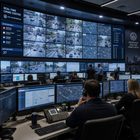 |
Real-Time Crime Centers (RTCC) | Centralized intelligence hubs fuse live feeds from LPR, CCTV, ShotSpotter, and databases, providing field officers with instant background intelligence during stops, pursuits, and critical incidents. |